$100m Acquisition as First Deal
Former auto mechanic Eugene Polevoy is an independent sponsor based in Toronto. His strong opinions routinely go viral on LinkedIn and were recently featured in PitchBook's daily newsletter. Eugene walks through how he built and exited an HVAC platform and talks about his latest move into a $100m commercial generator services deal.

$100m Acquisition as First Deal
Former auto mechanic Eugene Polevoy is an independent sponsor based in Toronto. His strong opinions routinely go viral on LinkedIn and were recently featured in Pitchbook's daily newsletter. Eugene walks through how he built and exited an HVAC platform and talks about his latest move into a $100m commercial generator services deal.
Minds Capital is an equity fund for independent sponsors. We invest $1-3m of equity per platform and average one commitment per month.
This episode is sponsored by




After a law degree and 6 years in instutitonal PE at OnCap, Eugene saw that institutional capital often misses opportunities in the lower-middle market. As an offspring, he launched Frontier Service Partners by acquiring three HVAC branches with $7m of EBITDA, then grew that to $12.5m through operational improvements before exiting in 2024.
His most recent deal, which he counts as his first stand-alone, is a platform in the commercial generator services space, acquired at over $100m EV. This was sourced through a long-standing relationship and funded with the help of a well-connected, credential'd partner.
Eugene walks us through the contrasts between the Canadian and US M&A markets. He says Canada is bifurcated, where businesses are either too small or already institutionalized. In the US, there is deeper buyer demand and more openness to proprietary, relationship-driven deals.
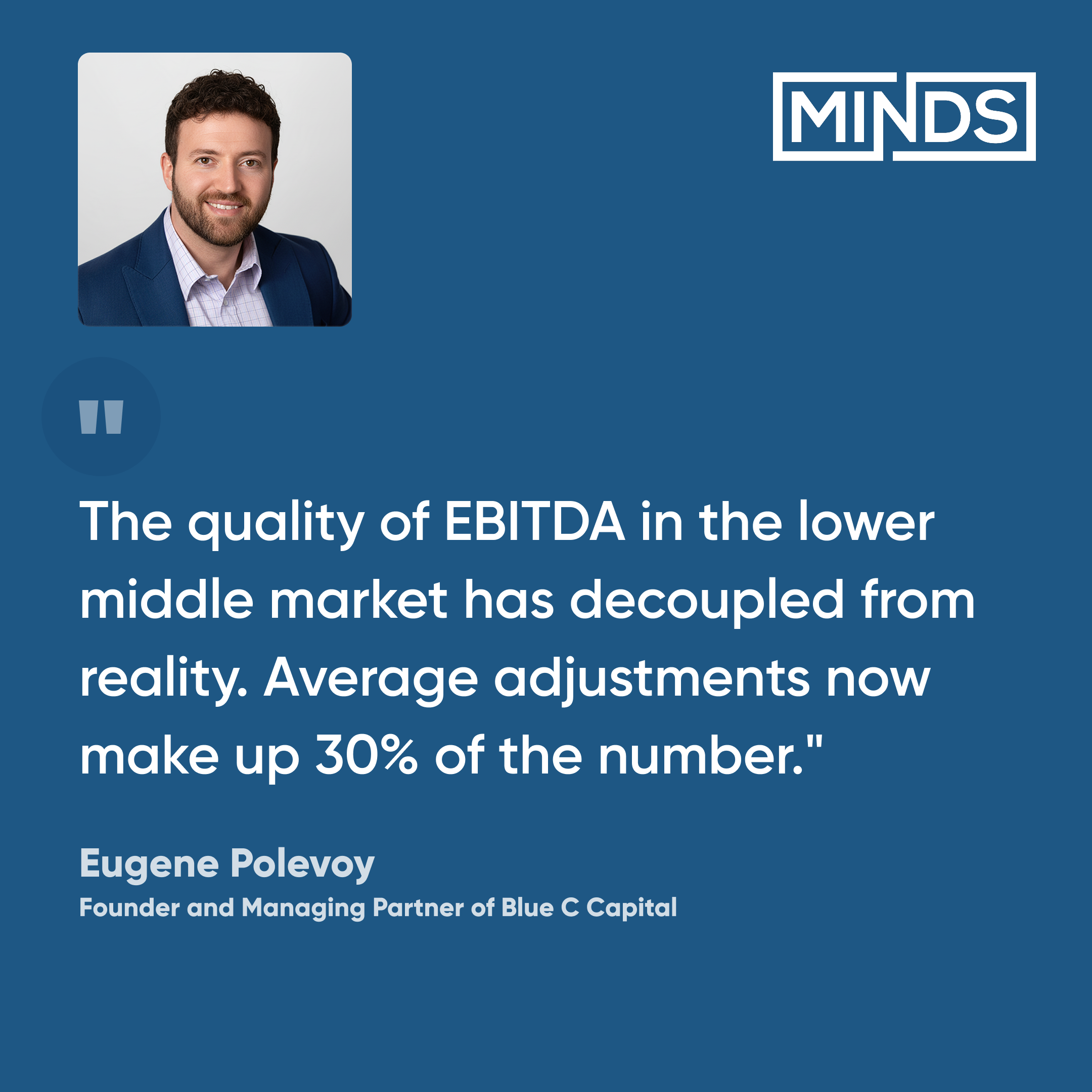
Eugene calls BS on EBITDA adjustments. He questions people's incentives, and challenges the integrity of nefarious QoE providers. He says add-backs have expanded meaningfully, particularly post-COVID, and warns that reported EBITDA sometimes overstates true cash flow. When leverage is underwritten against that number, the result is a capital structure that does not hold, leading to weaker returns and higher default risk. He says everyone in PE is aware, but no one dares say it out loud - until now, in this episode.
More recent episodes

From Minority Stake to Double EBITDA in 2 Years
Neel Bhargava shares how a minority stake in a Crunch franchise grew from 10 to 74 gyms, driven by thematic focus, recapitalizations, and strong management.

Why Committed LPs Beat Committed Capital
Ramiro Alfaro of Paltus Capital shares how deal-by-deal PE in Guatemala thrives with loyal LPs, long-term trust building, and first-mover market advantages.
Engineering 40% Carry
MIT grad Nick Haschka shares how he structured above-market carry—up to 80%—by creatively aligning sponsor and investor incentives in private equity deals.