The Applied AI Engineer: A New PE Weapon
Chris Breaux shares how he left $500m investment banking to build Emberline, an independent sponsor focused on government, defense, and vertical tech with AI-driven growth.


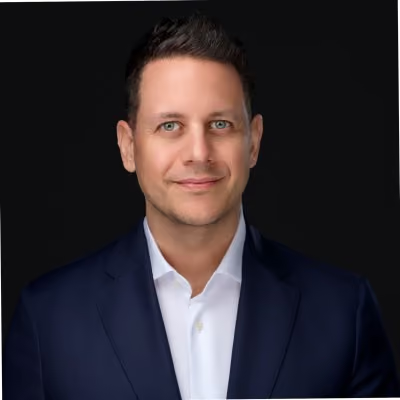
Chris Breaux left the world of $500m middle-market deals as an investment banker to build Emberline, an independent sponsor focused on the intersection between government, defense, and vertical tech. Their portfolio consists of 3 platform companies. They view technology and AI as a differentiator in the small business world, leaning heavily in on the implementation and utilization to drive organic growth.
Minds Capital is an equity fund for independent sponsors. We invest $1-3m of equity per platform and average one commitment per month.
This episode is sponsored by


Chris focuses on sticky, high-moat businesses adjacent to government and defense. Emberline currently manages 3 portfolio companies with 70 employees total. By staying hyper-specific rather than being a generalist, Chris builds credibility with both founders and LPs. This narrow focus creates a compounding effect for deal sourcing and allows him to navigate regulatory hurdles that scare off generalists.
Emberline is exploring the use of centralized, high-level staff to support small platforms. Chris is currently contemplating hiring an "Applied AI Engineer" to drift across the portfolio and optimize operations. This strategy brings elite technical talent to businesses that could never afford it on their own. It turns a group of small companies into a sophisticated, tech-forward engine.
In the age of AI, "spaghetti code" is a liability, not an asset. Chris learned this the hard way by rebuilding his first platform's entire tech stack from scratch after underestimating tech debt. Today, code is no longer a moat; judgment, taste, and speed are the new currencies of B2B software. Capital intensity is down, but velocity is up, meaning you must move fast or get disrupted.
The most dangerous move for a rookie sponsor is the desperation to "just get a deal on the board". Chris warns that first-time sponsors often ignore missing fundamentals in people and process just to close a transaction. Success requires a complete reset of expectations when moving from middle-market banking to sub-$20m deals. You have to go slow to go fast; otherwise, you will break the business.
More recent episodes

Promoted from Associate to MD at Independent Sponsor Firm
Jimmy Watson shares his journey from FP&A at Raytheon to Managing Director at Clavis Capital Partners, discussing independent sponsorship and navigating the lower middle-market.
Two Recaps To 10.5x MOIC
Dan Chetrit recapped his first search deal during COVID, rolled carry into majority control, and built Snowdon Capital into a top-decile independent sponsor platform.

Tripled EBITDA, Doubled Multiple, Exited Early
Richard Baum pioneered the independent sponsor model at Consumer Growth Partners, transforming deal-by-deal investing through deep retail sector expertise and proprietary deal sourcing.