1 Equity Raise ($500k), 4 PortCos
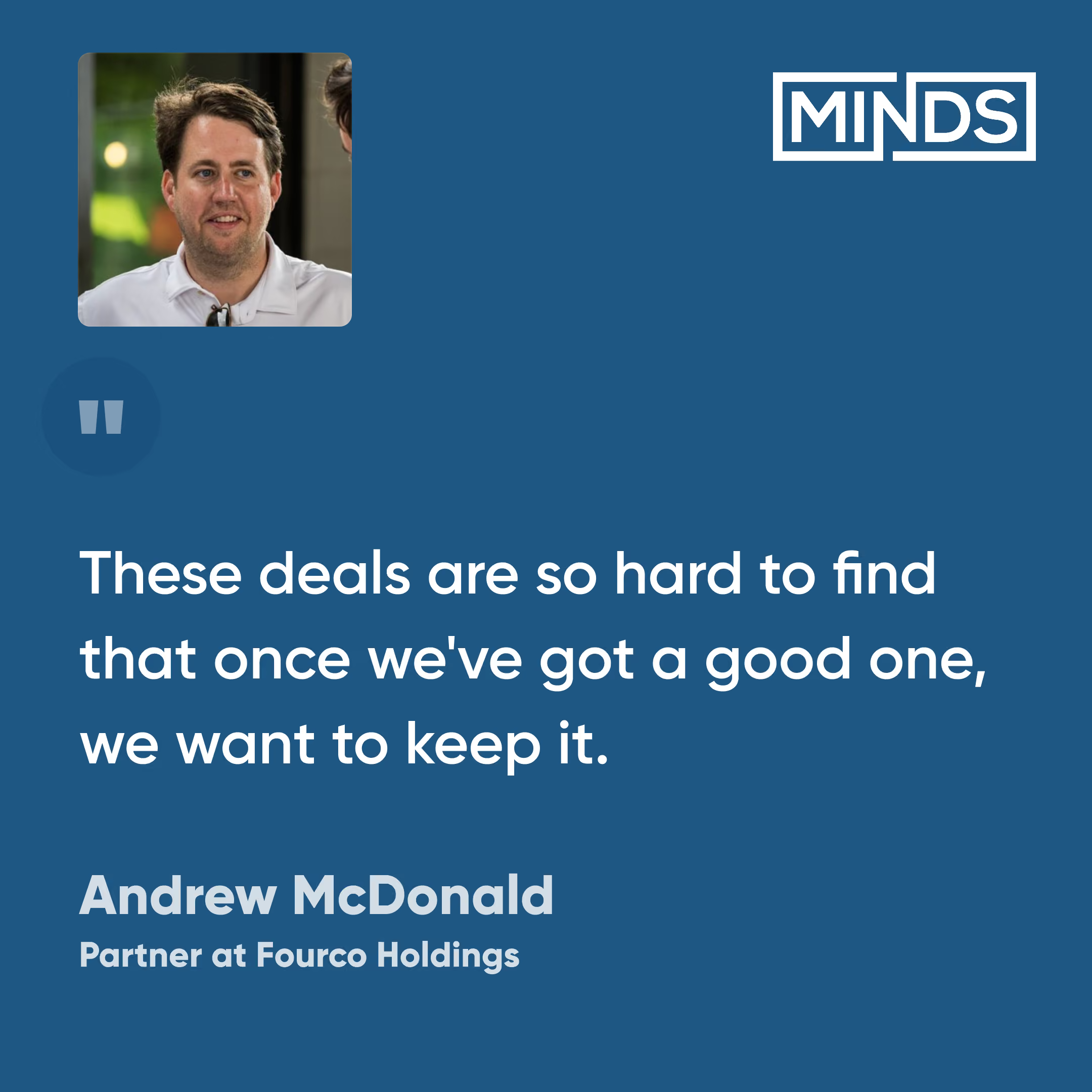
Andrew McDonald didn't build Fourco Holdings with a deck and a thesis. He built it by buying one small business, making it throw off cash, then buying the next one.

1 Equity Raise ($500k), 4 PortCos
Andrew McDonald raised $500k to acquire one small business selling work safety shoes in 2015. He used the cash flow from this fledgling company to acquire his next one, a fireworks distributor. He recently clinched his first exit, and today enjoys autonomous control over an eclectic portfolio. Andrew is wise beyond his years, with analogies that will make your head spin.
Minds Capital is an equity fund for independent sponsors. We invest $1-3m of equity per platform and average one commitment per month.
This episode is sponsored by




At first glance, the portfolio feels a bit random: Fireworks, drone displays, confetti supply, FedEx routes, and a workwear safety shoe distributor (recently exited). Most PE funds wouldn't group these together in one portfolio (let alone acquire them in the first place). But Andrew's approach is more practical than intellectual as he searches for durable demand and sustainable operations, with the well-known willingness to get into the messy details (i.e. "the weeds"). He spends enough time inside the business to really understand what moves the needle.
The first deal set the tone. Workwear Safety Shoes was a specialty distributor serving customers who needed OSHA-compliant footwear for employees in the field. The revenue was incredibly stable and grew 2-4% every year from 1999 to 2015. There was furthermore no customer concentration, and retention had stayed above 99%. After buying it, Fourco pushed growth higher, improved EBITDA margins, cut inventory by about 25%, and nearly halved A/R days outstanding. And that’s how the initial $500k equity check turned into a 10x+ MOIC exit.
Andrew advocates for longer holds (with a realistic & pragmatic perspective) because it's tough to find good companies, and closing them is even tougher. And then you need to staff them too. Andrew’s view is when you find something that works, don’t rush to sell it. Let revenue compound and use dividends to fund your next move. Give yourself time for a "bluebird" moment, whether that’s a strategic buyer, a hot cycle in the industry, or a shift in customer demand.
For first-time buyers, the advice is straightforward: View your first acquisition as a Trojan horse. It doesn’t have to be perfect (but it can’t be reckless either). Buy a B or B+ business, get in the game, build credibility, and create enough momentum to keep going. Then it’s about volume: make the calls, take the meetings, run the reps, and put in enough effort that not closing a deal starts to feel like the exception.
More recent episodes

33 PortCos in 6 Years
Robert Graham built 33 portfolio companies in 6 years through SIG Partners, starting with a healthcare platform that grew to $30M EBITDA.
Platform + Key Competitor = Multiple Expansion
Willistown Capital's award-winning acquisitions of Quiltcraft and Fabtex demonstrate how independent sponsors execute complex deals for multiple expansion.

Buy Small ($1m EBITDA at 4x), Keep Winning
Learn Ryan Sullivan's proven strategy at North Park Group: buy $1m EBITDA companies at 4x multiples, leverage SBA financing, and achieve 25% annual returns.